
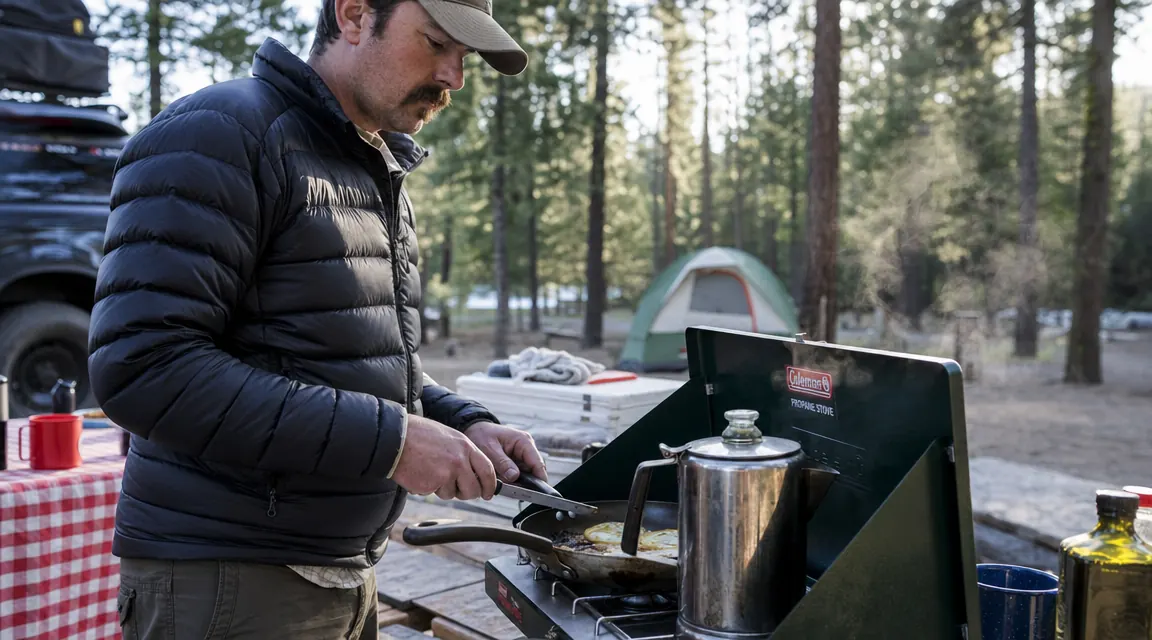
I made the single-burner mistake for three summers. Four people, one propane burner, one skillet. Eggs for the kids went in first, came out right. By the time I finished toast and started the bacon, the eggs were cold. Somebody was always eating cold food. It is not a comfort issue. It is a logistics failure, and it happens every single morning when you are under-stoved for your group size.
The Camp Chef Explorer two-burner camp stove fixed that. At 30,000 BTU per burner, two independent valves, and a modular leg system that levels itself on dirt, it is the camp stove I bring on every trip now. If you are still running a single-burner and wondering whether the upgrade is worth it, here are the ten reasons I would tell you yes without hesitating.
Still cooking one thing at a time? The Camp Chef Explorer fixes that.
Two 30,000 BTU burners, cast-iron compatible grates, and legs that level on dirt. Check today's price before your next trip.
Amazon Check Today's Price on Amazon →You Cook Two Things at the Same Time
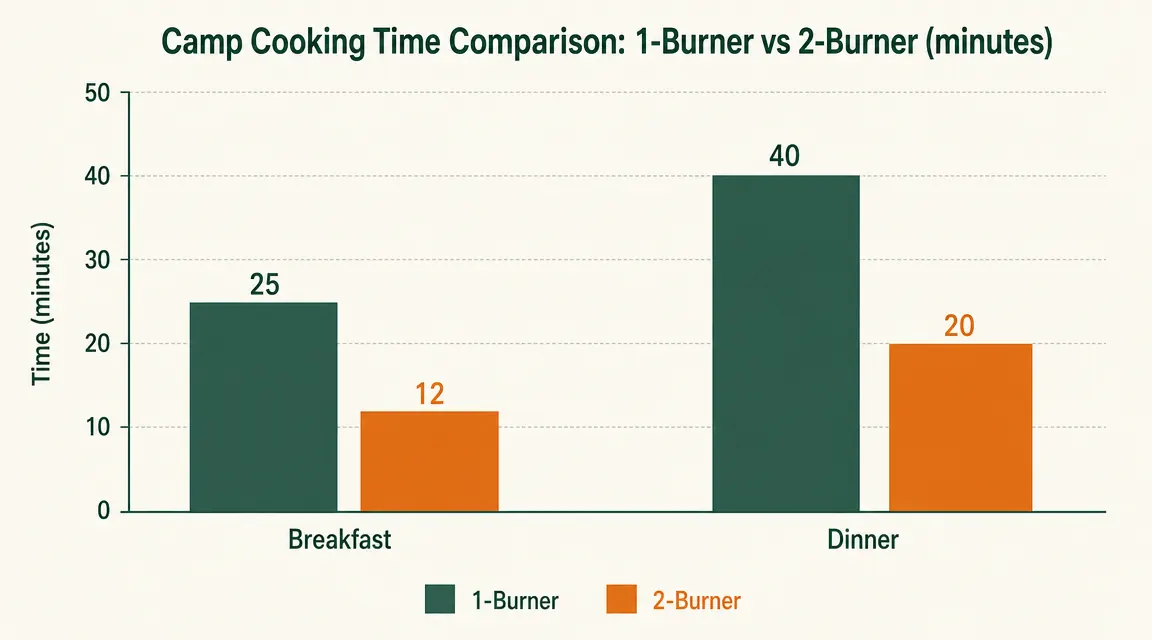
This is the whole argument. Bacon and eggs. Pasta and sauce. Coffee and oatmeal. A two-burner camp stove lets you run both simultaneously at independent heat settings. One valve for the simmer, one for the sear. You are not waiting, you are cooking. For a group of four, this cuts breakfast time in half compared to sequencing everything through a single burner.
30,000 BTU Per Burner Boils Water Fast at Elevation
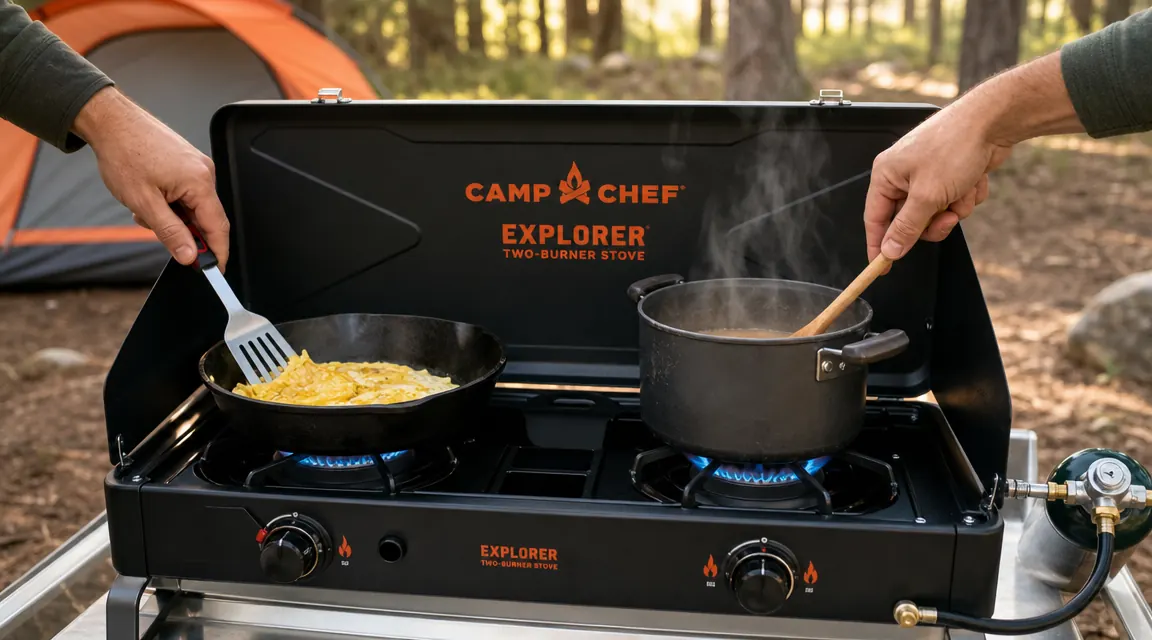
A standard backpacking canister stove pushes 6,000-10,000 BTU. The Camp Chef Explorer runs 30,000 BTU on each side. At 7,200 feet in Colorado last September, I had a full 12-quart pot of water at a rolling boil in under nine minutes. That same pot on a 10,000 BTU single-burner would have taken closer to 25 minutes. Output matters more at altitude, where boiling points drop and burner efficiency falls off.
Independent Valves Mean Real Heat Control
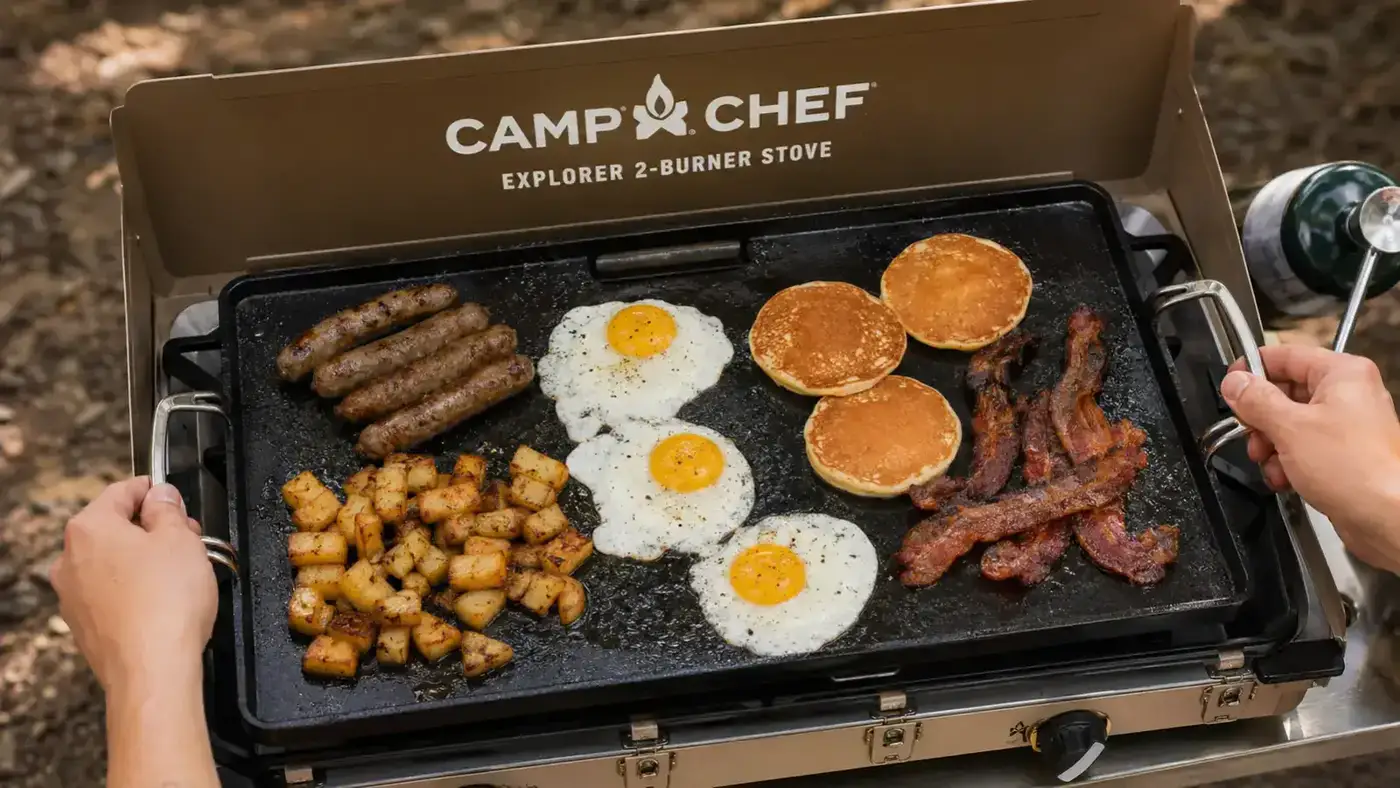
A two-burner camp stove with separate valves lets you hold a genuine simmer on the left while running a high-heat sear on the right. That is not possible on a single burner. Scrambled eggs want low-and-slow. Sausage links want high heat to get color. Running both at once, each at the right temperature, is the difference between decent camp food and food that actually tastes like breakfast.
Cast Iron Works on It
The Camp Chef Explorer's grates are rated for heavy cast iron. A 12-inch Lodge skillet sits flat and stable across both grates without rocking. A lot of lightweight backpacking stoves flex or tip under cast iron weight. If you bring a Dutch oven or a full-size skillet to camp, you need a stove that can carry the load without wobbling. The Explorer handles it without any drama.
The Legs Level on Uneven Ground
Camp picnic tables are never flat. The Explorer's modular legs adjust independently, so you can get the cooking surface level even on a table that tilts three degrees toward the fire ring. This matters more than it sounds. A skillet that lists to the right pools grease on one side and dries out the other. Spending 90 seconds leveling the stove before you start cooking saves burned food and tilted pots.
Wind Panels Block Flame Loss Without a Windscreen Puzzle
Single-burner stoves in an open-sided windscreen lose 30-40% of their effective BTU output in a 10-mph crosswind. The Explorer has built-in side and back wind panels that fold out and actually stay put. I tested it on a gusty afternoon at 5,500 feet in Utah, sustained winds around 15 mph, and the flame stayed even and consistent without any foil windscreen rigging. You lose maybe 10% output instead of 40%.
Standard 1-lb Canisters and Full LP Tanks Both Work
The Explorer connects to a standard 1-lb propane canister for short weekend trips or to a full 20-lb LP tank with a hose adapter for week-long stays. A single-burner canister stove is usually locked to one format. The flexibility to run a big tank when you are at a drive-up site and switch to a small can for a shorter trip means one stove covers every scenario without carrying extra hardware.
The Matchless Ignition Actually Lights on the First Try
Piezo igniters on cheap stoves fail after a season. The Camp Chef Explorer's matchless ignition has lit first-click for me through three full camping seasons, including one trip where the stove sat in the truck bed through two days of rain before we used it. I still carry a lighter as backup because that is just what you do. But I have not needed it once on this stove.
It Handles a Full Camp Dinner, Not Just Breakfast
Single-burner stoves are optimized for boiling water, one pot at a time. A two-burner camp stove opens up actual dinner cooking: pasta on one side while you saute onions and garlic on the other, or a pot of camp chili simmering while you fry cornbread in a skillet. If you want to know what that looks like in practice, the guide to cooking real camp meals on a two-burner stove walks through three full dinner setups using the Explorer.
4.7 Stars from 9,450 Buyers Tracks With What I See in the Field
The Camp Chef Explorer sits at 4.7 out of 5 across more than 9,400 Amazon reviews. The consistent praise is for ignition reliability, BTU output, and build quality. The honest complaints cluster around weight (it runs just over 12 lbs with legs attached) and the carry bag wearing out after a couple of seasons. Both fair. It is a stove you load into a truck, not one you strap to a pack. For a full breakdown of what works and what to watch for, read the Camp Chef Explorer stove review.
What I Would Skip
A two-burner camp stove makes no sense if you are going ultralight or portaging any distance. At 12-plus pounds with the legs, the Explorer stays in the truck. Solo campers doing one-pot meals do not need the second burner and can get by with a lighter canister stove without giving anything up. If your camping style is mostly hammock and minimal kit, the extra weight and pack volume are a real tradeoff, not a small one.
Four people, one propane burner, one skillet. Somebody was always eating cold eggs. The second burner fixed that in a single morning.
Ready to cook two things at once? Here is the stove that makes it happen.
The Camp Chef Explorer runs 30,000 BTU per burner, levels on uneven ground, and has started first-click for three seasons running. Check today's price on Amazon.
Amazon Check Today's Price on Amazon →