
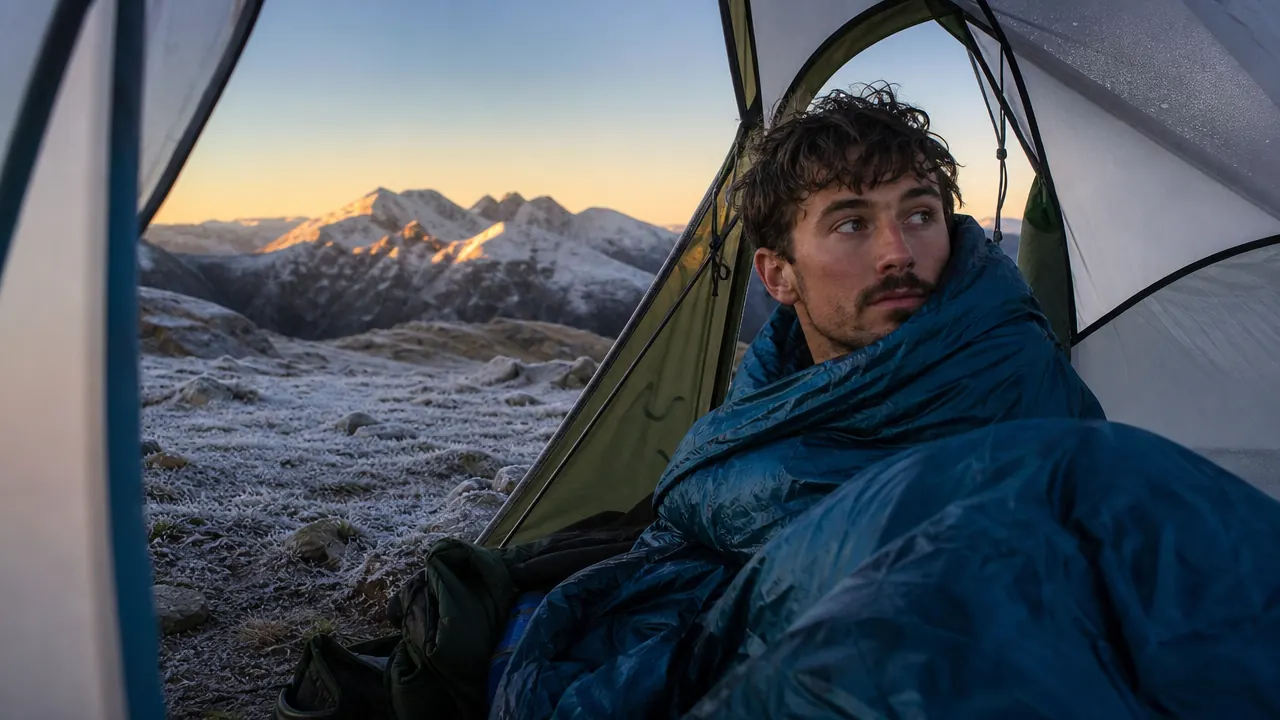
I have slept through a lot of cold nights I did not see coming. A September trip in the Poconos that dropped to 38 degrees by 2 a.m. An August campout in the Smokies where a storm rolled in and the temperature fell 22 degrees in four hours. Each time I had a summer sleeping bag, I spent the last few hours of the night curled up in my fleece, watching the clock. After enough of those nights, I stopped buying summer-only bags. A three-season sleeping bag rated to 35 degrees costs about the same and covers every trip I take from March through November. The oaskys 3-season sleeping bag is one of the most reviewed options at that price point, with over 24,000 ratings and a 4.5-star average. Here are the ten reasons that buying three-season instead of summer-only is the right call for most campers.
Still sleeping in a 50-degree bag while shoulder-season temps drop to 38?
The oaskys three-season sleeping bag is rated to 35 degrees, weighs around 2.6 lbs, and packs down to the size of a large water bottle. Over 24,000 buyers have rated it 4.5 stars. Check the current price on Amazon before your next trip.
Amazon Check Today's Price on Amazon →A Single Cold Front Turns a 60-Degree Night Into a 38-Degree Night
Forecast lows are averages, not guarantees. Fronts move faster than trip planning. A three-season sleeping bag rated to 35 degrees gives you a 25-degree cushion below a typical summer night low. A summer bag rated to 50 degrees gives you zero cushion when the temperature actually drops. I keep a thermometer at my campsite and the actual low has been more than 10 degrees colder than the forecast low on at least a third of my trips. That gap is the reason a three-season sleeping bag exists.
Shoulder-Season Camping Is Where Most of the Best Sites Open Up
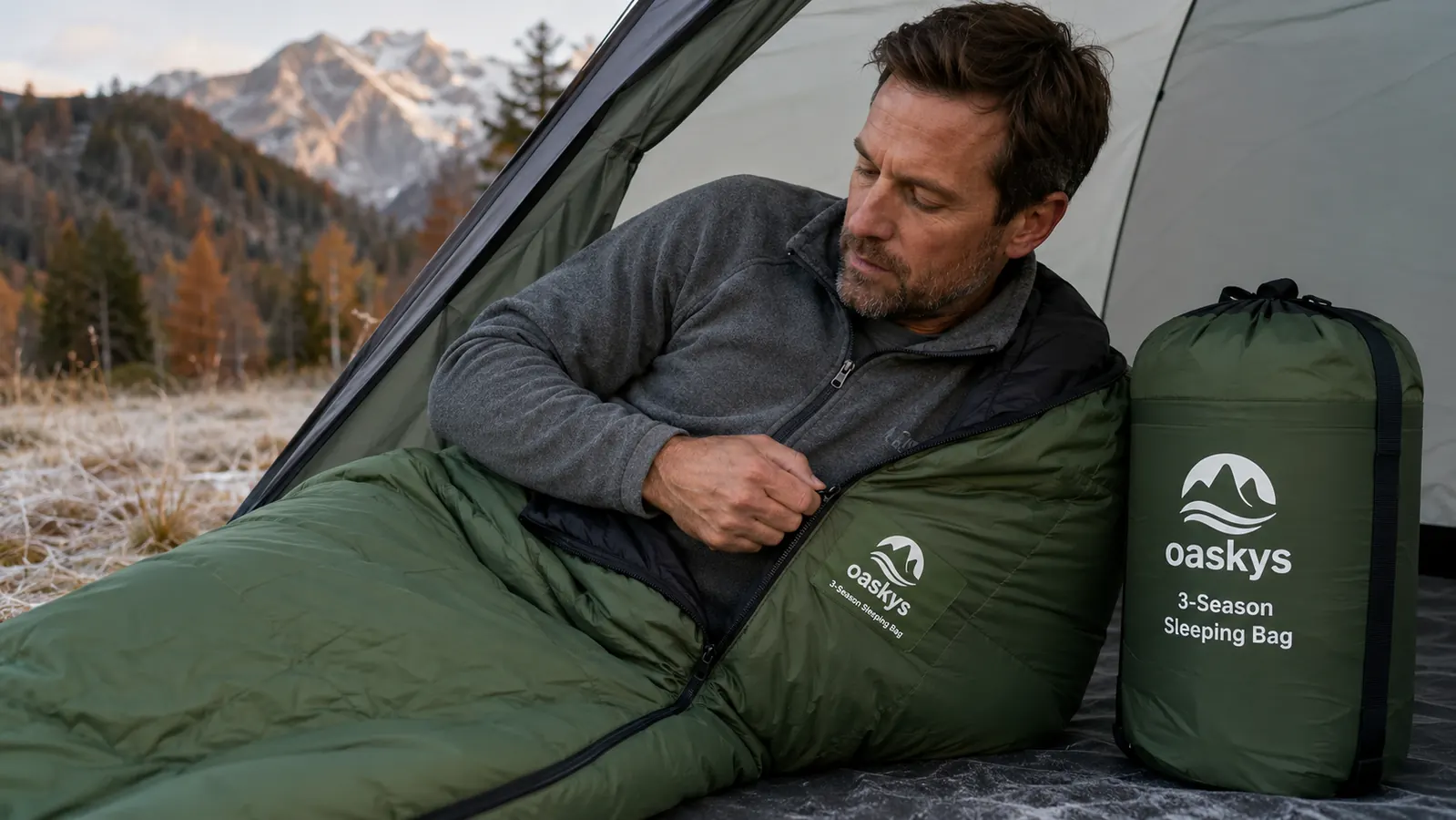
September and October in the mid-Atlantic and Southeast are legitimately great camping months. Crowds thin out, insects largely disappear, and the sites that were booked solid in July are suddenly available. But shoulder-season nights regularly land in the high 30s and low 40s. A summer sleeping bag gets you through July and August and then sits in the closet. A three-season sleeping bag gets you through all of it. Read how the oaskys bag performed over 18 nights from April through October.
You Can Always Unzip and Vent; You Cannot Add Warmth You Do Not Have
A three-season sleeping bag in warm weather is easy to manage. Unzip the footbox. Leave the top open. Sleep on top of it like a blanket. The bag adapts down. A summer sleeping bag at 40 degrees does not adapt up. You end up layering every piece of clothing you packed, and you still wake up cold at 4 a.m. One direction is comfortable. The other direction is not.
The Price Difference Between Summer and Three-Season Is Often Under $15
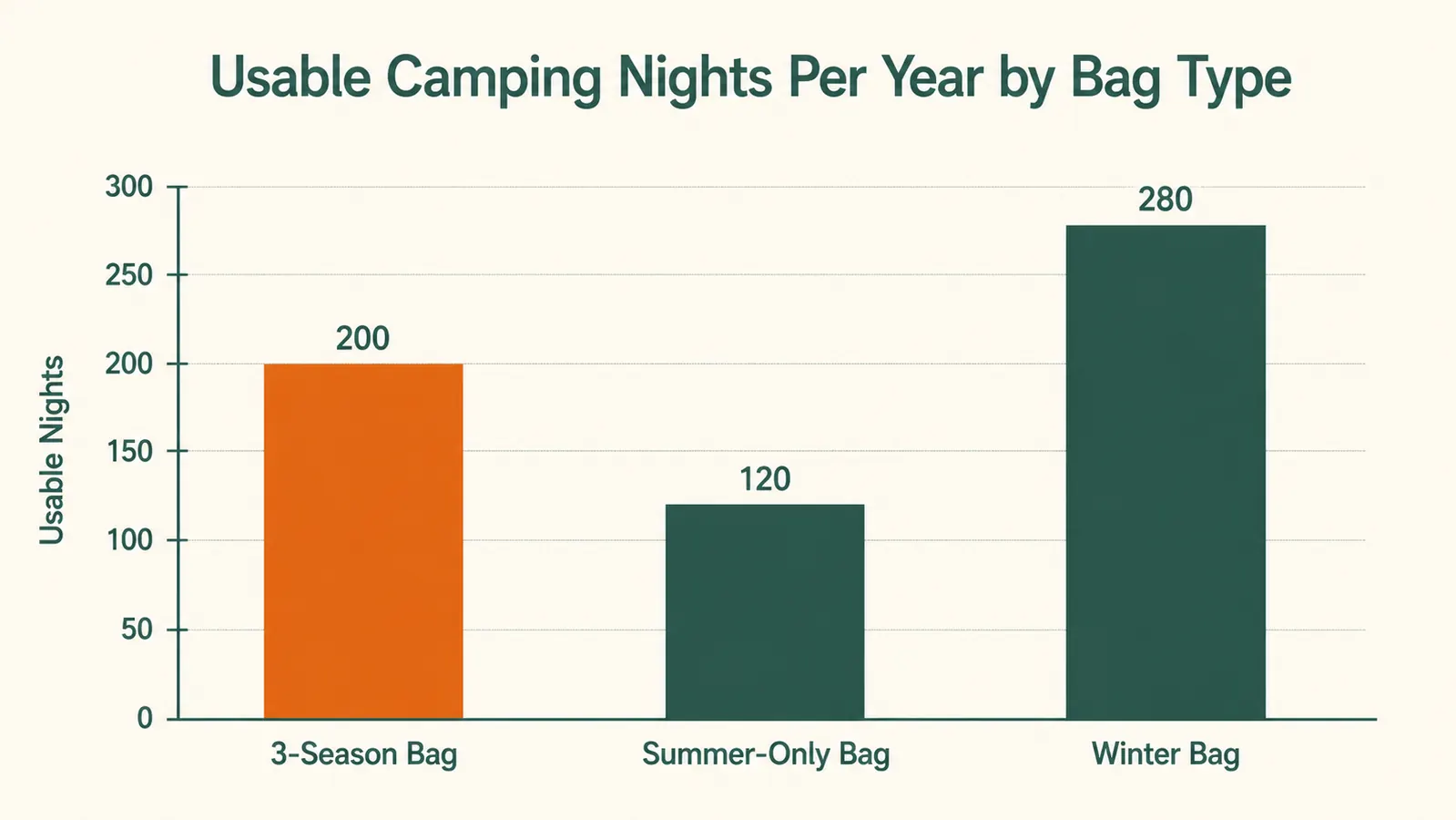
Budget sleeping bags rated to 50 degrees often run $20 to $25. Budget three-season sleeping bags rated to 35 degrees run $25 to $35. The oaskys bag sits right at that range and covers a much wider temperature window for a small price difference. Spending $10 more upfront to avoid one ruined night is an easy calculation. If you are already reading specs and comparing options, go three-season.
Elevation Changes the Math Fast
Campsites at 3,000 feet or higher run 10 to 15 degrees colder at night than a nearby town in the valley. A summer night at a mid-elevation site in Virginia or Tennessee can drop to 45 degrees in July and to 32 degrees in September. If your trips ever involve the Appalachians, Rockies, Cascades, or any site above 2,500 feet, a sleeping bag rated only to 50 degrees is not enough for most of the calendar year. A three-season sleeping bag covers the full range of elevations most car campers encounter.
The actual low has been more than 10 degrees colder than the forecast low on at least a third of my trips. A three-season sleeping bag is the margin that keeps you sleeping.
Synthetic Fill Handles Moisture Better Than Down at Budget Price Points
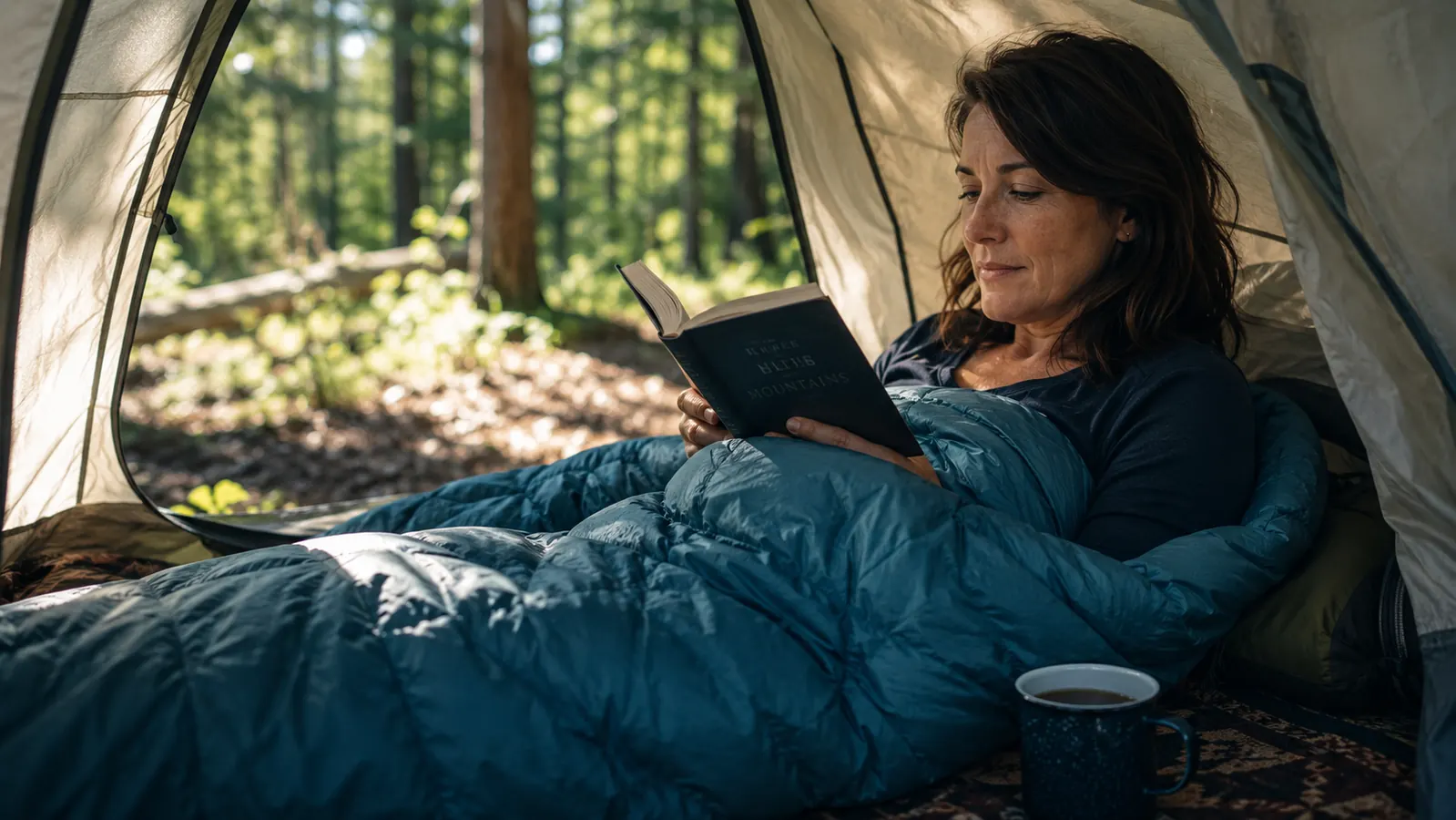
The oaskys sleeping bag uses synthetic polyester fill. At the budget tier, synthetic is the right call. Down loses most of its insulating value when it gets wet, and at a campsite where condensation, a leaky tent seam, or a kid who spills a water bottle are real risks, a sleeping bag that holds warmth even when damp is more practical than one that does not. Learn more about managing moisture and layering to maximize warmth in a sleeping bag at cold temperatures.
A Three-Season Sleeping Bag Works as an Emergency Blanket at Home
Power outages in winter, a guest who needs a warm place to sleep, a kid who gets sick and wants to camp out in the living room. A sleeping bag rated to 35 degrees is actually useful when you pull it out of storage off-season. A 50-degree summer bag is less useful in all of those situations. Gear that works in more contexts is gear that earns its storage space.
The Zipper Design on Better Three-Season Bags Is Built for Regular Use
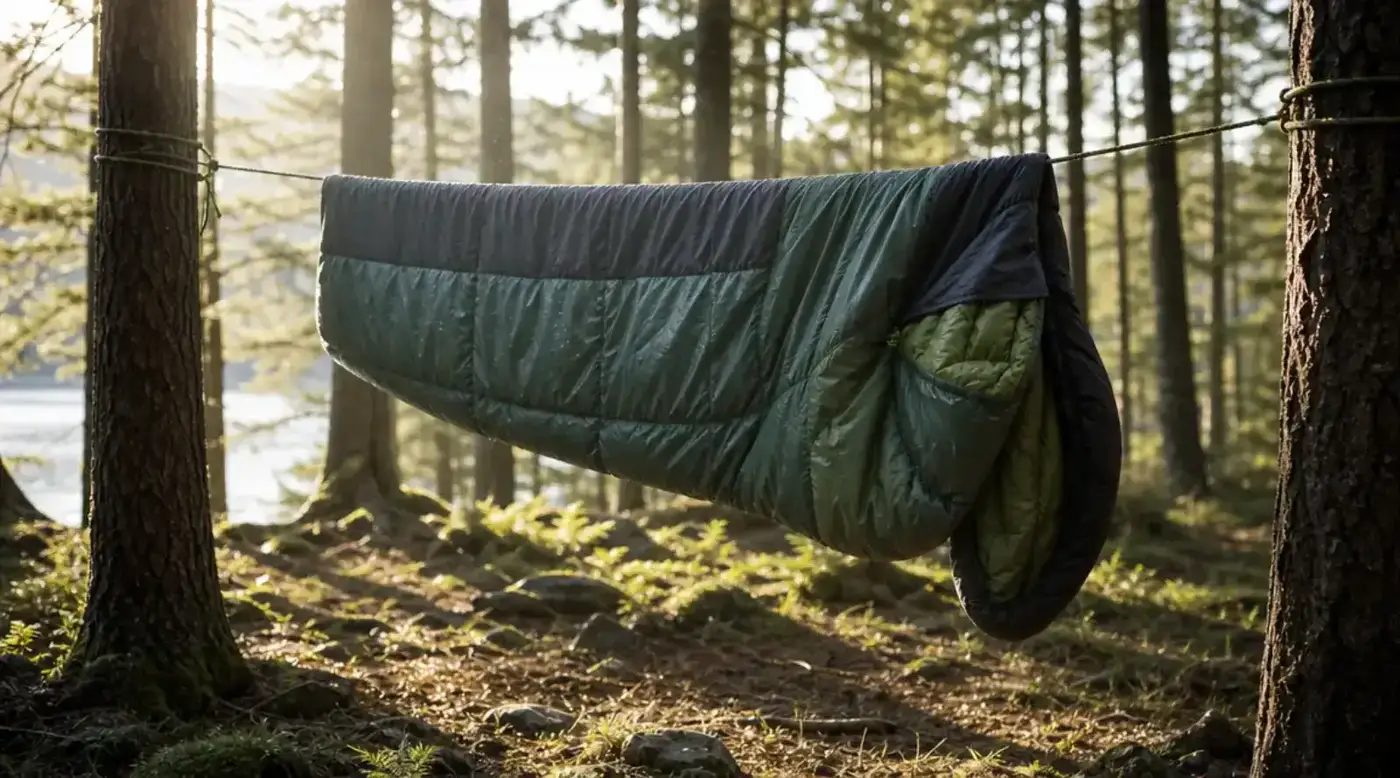
Cheap summer bags often use thin zippers that snag after five or six trips. The oaskys sleeping bag uses a full-length zipper with a snag-free design on both the left and right sides, so two bags can be zipped together for couples. That is a feature that shows up because the product is designed for repeated use across a real camping season, not just a few summer nights. The zipper is one of the first things to fail on a sleeping bag; a bag built to handle 35-degree nights is built to a higher use-frequency standard than one built only for summer.
Pack Size Is Comparable; the Extra Fill Does Not Cost You Much Space
The oaskys three-season sleeping bag compresses down to roughly the size of a large water bottle, around 13 inches by 8 inches stuffed. That is not dramatically larger than a budget summer sleeping bag. For car camping, where you are loading gear into the back of a truck or SUV, the difference in pack size between a summer bag and a three-season sleeping bag is not a real constraint. You are not counting ounces for a backpacking trip. Go with the warmer option.
You Only Have to Buy One Bag, Not Two
Some people buy a summer sleeping bag and plan to buy a colder-weather bag later. In practice, "later" often means after one or two genuinely bad nights when the weather turned and the summer bag was not enough. Buying the right three-season sleeping bag once costs less than buying a summer bag, sleeping cold twice, and then replacing it. The oaskys bag has over 24,000 reviews because it is the bag a lot of campers end up buying the second time, after they figure out that a summer-only rating is too narrow for real-world use.
What I'd Skip
A three-season sleeping bag rated to 35 degrees is not the right tool for winter camping or anything below freezing. If you are planning trips in December through February in cold climates, at elevation, or anywhere nights regularly drop below 25 degrees, you need a zero-degree or negative-rated bag with down fill and a serious draft collar. The oaskys bag and most three-season sleeping bags in this price range are not that product. They are also not ideal for ultralight backpacking where every ounce is budgeted, since compression sacks only get you so far with synthetic fill. For car camping and family camping from late winter through early winter, though, the three-season sleeping bag is the one you want. Buying a summer-only sleeping bag to save $10 is a decision that will cost you sleep on at least one trip.
Buying a summer-only bag to save $10 is a decision that costs you sleep on at least one trip.
A bag that handles 35 degrees costs about the same as one that taps out at 50.
The oaskys three-season sleeping bag covers April through November for most campers, compresses to a manageable pack size, and has 24,000-plus reviews at 4.5 stars. Check today's price on Amazon and see which size works for your next trip.
Amazon Check Today's Price on Amazon →